
Open source · v0.6.2 · Apache-2.0
Il tuo agente non dovrebbe rileggere tutto, ogni volta.
TrueNex Memory è un layer di memoria locale, persistente e open-source per agenti di coding AI (Claude Code, Codex, Cursor, Kimi). Basta bruciare decine di migliaia di token a rileggere documentazione già vista: interroga invece un archivio locale e ispezionabile di decisioni, architettura e contesto indicizzato.
100% in locale · nessun cloud, nessuna telemetria
100%
dei dati resta con te
0.6.2
release corrente
0
telemetria, mai
Core open source
Apache-2.0
CLI + server MCP, tutto in locale.
truenex-mem: init, index, search, export/import, migrazioni di schema con backup automatici e un server MCP stdio che il tuo agente può chiamare direttamente.
Metti una stella su GitHub →
Licenza Pro
€39 · una tantum
Auto-memory avanzata & dashboard.
Stessi dati locali, stesse garanzie di privacy. Pro aggiunge generazione automatica della memoria, una dashboard di conoscenza, vista cross-progetto e supporto prioritario.
Confronta Free e Pro →
Architettura
Una pila a 9 strati, interamente sul tuo disco.
Dai file grezzi del progetto a un database locale interrogabile e tracciato da un ledger: ogni strato è ispezionabile e niente lascia la tua macchina se non lo esporti tu stesso.
01
CLI — truenex-mem
init, add, list, search, index, export/import, migrate, doctor — ogni operazione disponibile da riga di comando.
02
Server MCP (stdio)
memory_search, memory_add, global_status, global_project_context — esposti direttamente a Claude Code, Codex, Cursor e ogni agente compatibile MCP.
03
Storage — SQLite + Qdrant
Indice SQLite FTS5 persistente per il retrieval esatto, con un backend Qdrant locale opzionale per la ricerca vettoriale semantica.
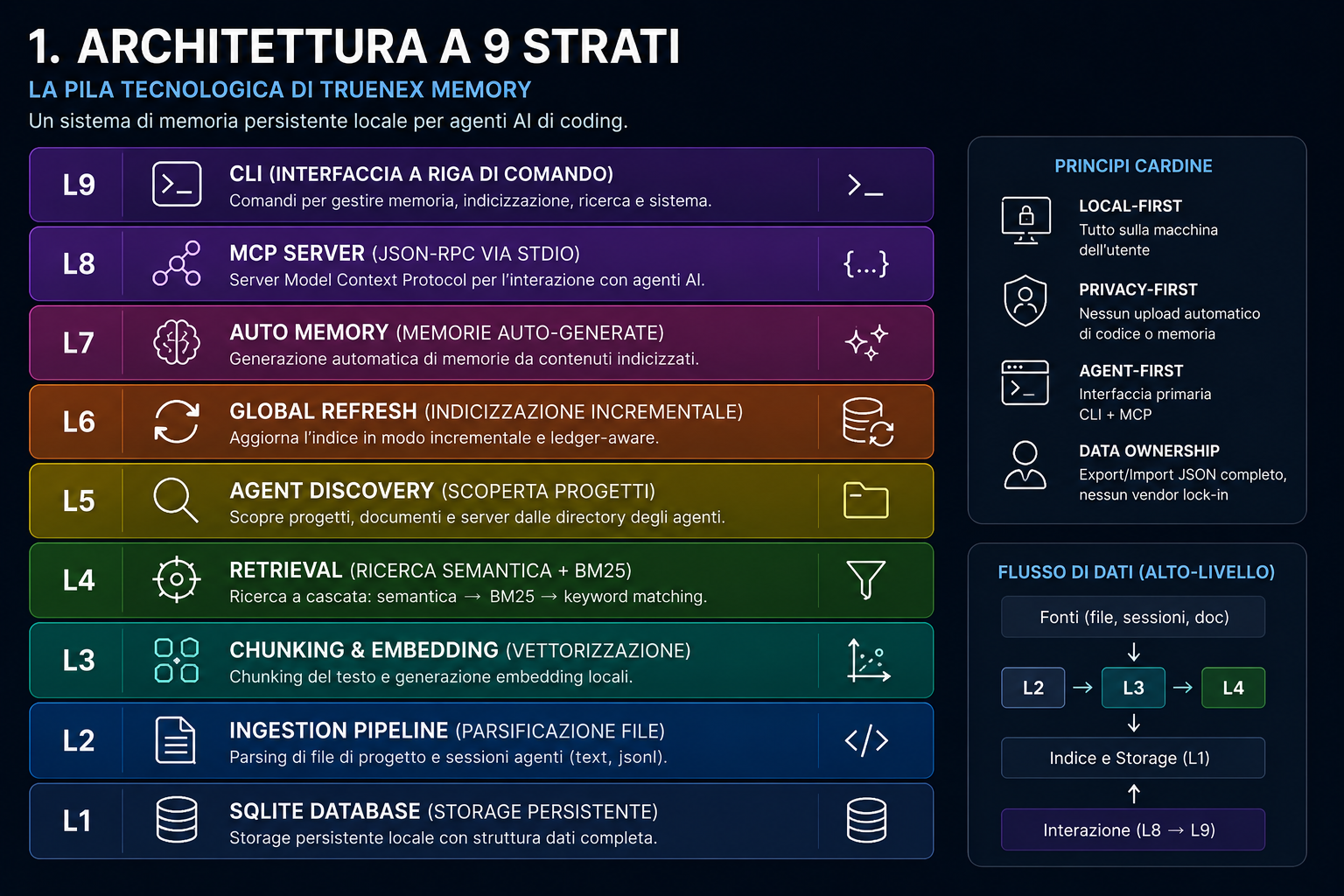
La pila completa: dall'ingestion all'interazione via CLI/MCP.
Funzionalità
Tutto ciò che include il core open-source.
Nessun elemento essenziale dietro paywall: storage locale, indicizzazione, ricerca, integrazione MCP e proprietà dei dati fanno parte del core gratuito Apache-2.0, oggi e in ogni release futura.
01
Retrieval ibrido RRF
La Reciprocal Rank Fusion unisce memorie curate e chunk di documenti: i recall esatti restano in testa, senza rumore BM25 a seppellirli.
02
Ricerca FTS5 persistente
Un indice SQLite FTS5 durevole con backfill e trigger automatici: nessuna scansione dell'intero corpus a ogni query.
03
Ranker semantico opzionale
Embedding multilingual-e5 opzionali come terzo ranker RRF, con cache vettoriale memmap persistente per avvii a freddo quasi istantanei.
04
Auto-memory conservativa
I candidati restano non verificati finché non li approvi, rifiuti, promuovi o rimuovi: niente viene scritto in memoria silenziosamente.
05
Workflow globale multi-progetto
Scopri le fonti degli agenti, conferma un catalogo ed esegui un refresh incrementale su tutti i progetti della tua macchina.
06
Proprietà dei dati
Export/import completo e migrazioni di schema con backup locali automatici: la tua memoria è sempre un file JSON portabile.
Cosa ha portato la linea 0.6.
La linea 0.6 ha aggiunto tre capacità: lo scope sulla ricerca, il grafo del codice, il profilo degli agenti. Poi la 0.6.1 e la 0.6.2, uscite lo stesso giorno, hanno corretto quattro difetti che solo una macchina con dati veri poteva mostrare.
✓v0.6.0 — Scope sulla ricerca: la condizione vive dentro l'SQL di FTS5 e corrisponde a segmenti interi del percorso. Insieme cieco da 2/32 a 8/32, MRR da 0,042 a 0,128.
✓v0.6.0 — Grafo del codice: chi chiama una funzione e quali test la coprono, letti dalla struttura del sorgente. Chiamanti fra file da 4/23 a 18/22, precisione 323 su 323.
✓v0.6.0 — Profilo degli agenti: un solo testo scritto nei file utente di otto client, più il campo instructions dell'handshake MCP. Una sorgente, nessuna copia per client da tenere allineata.
✓v0.6.0 — Il comando upgrade: migra lo schema con un backup che precede la migrazione, ricostruisce i grafi, riscrive il profilo. Provato su tre archivi reali, fino a 21.601 documenti e 4 GB.
✓v0.6.1–0.6.2 — Quattro difetti trovati aggiornando una macchina vera: cartelle di configurazione trattate come progetti, un grafo vuoto indistinguibile da uno riuscito, il linguaggio illeggibile mai nominato, e nessun modo di rimuovere un grafo una volta costruito.
✓Limite dichiarato — VB.NET, Razor e SQL non hanno grammatica: 93 file su tre progetti restano fuori dal grafo, e il grafo lo dichiara invece di rispondere zero. La ricerca testuale su quei file continua a funzionare.
Come funzionano davvero discovery, ingestion e ledger.
Due diagrammi dalla documentazione tecnica interna: la pipeline completa da discovery a storage, e la state machine che traccia ogni fonte indicizzata.
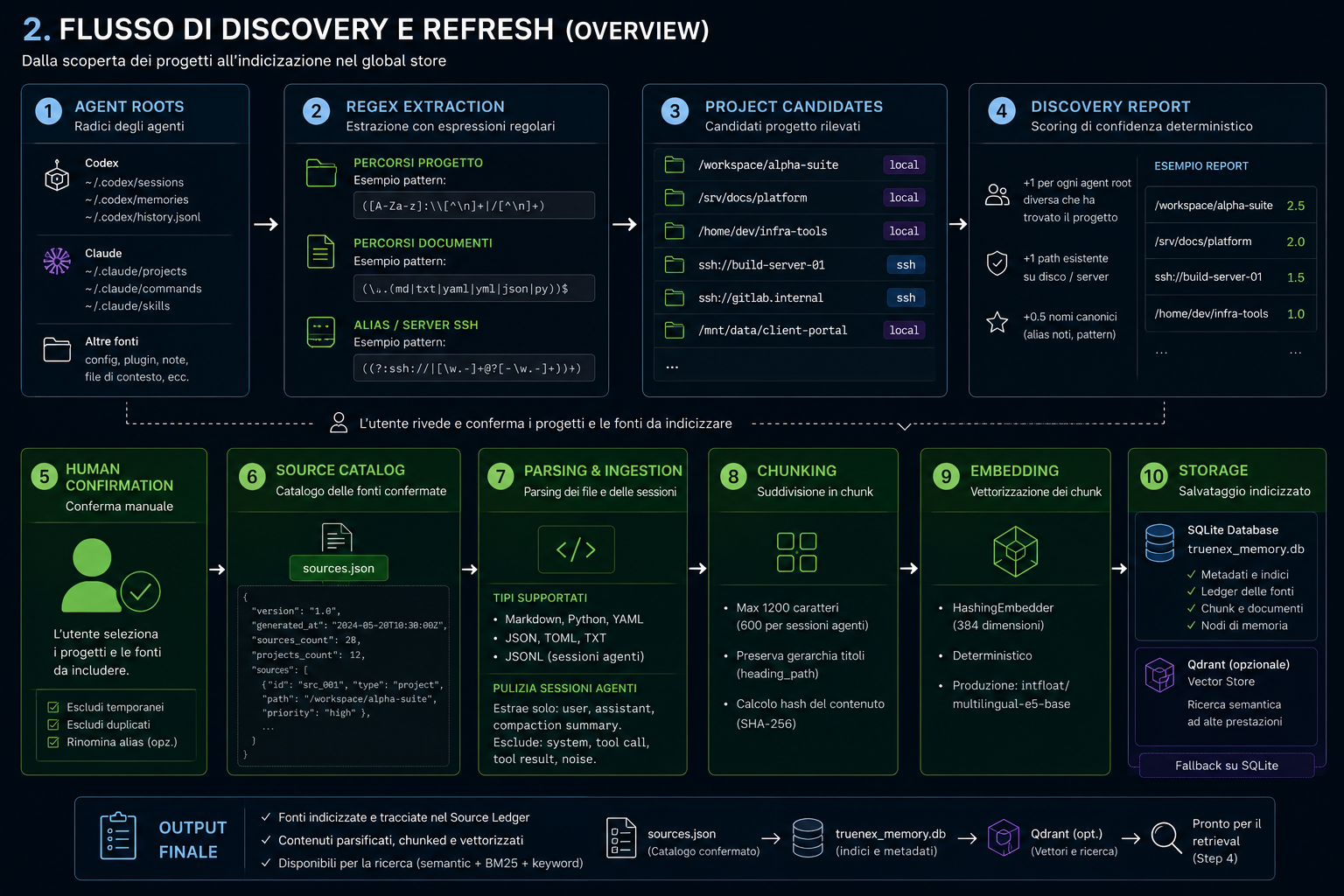
Flusso di discovery e refresh — dalle radici degli agenti allo storage indicizzato.
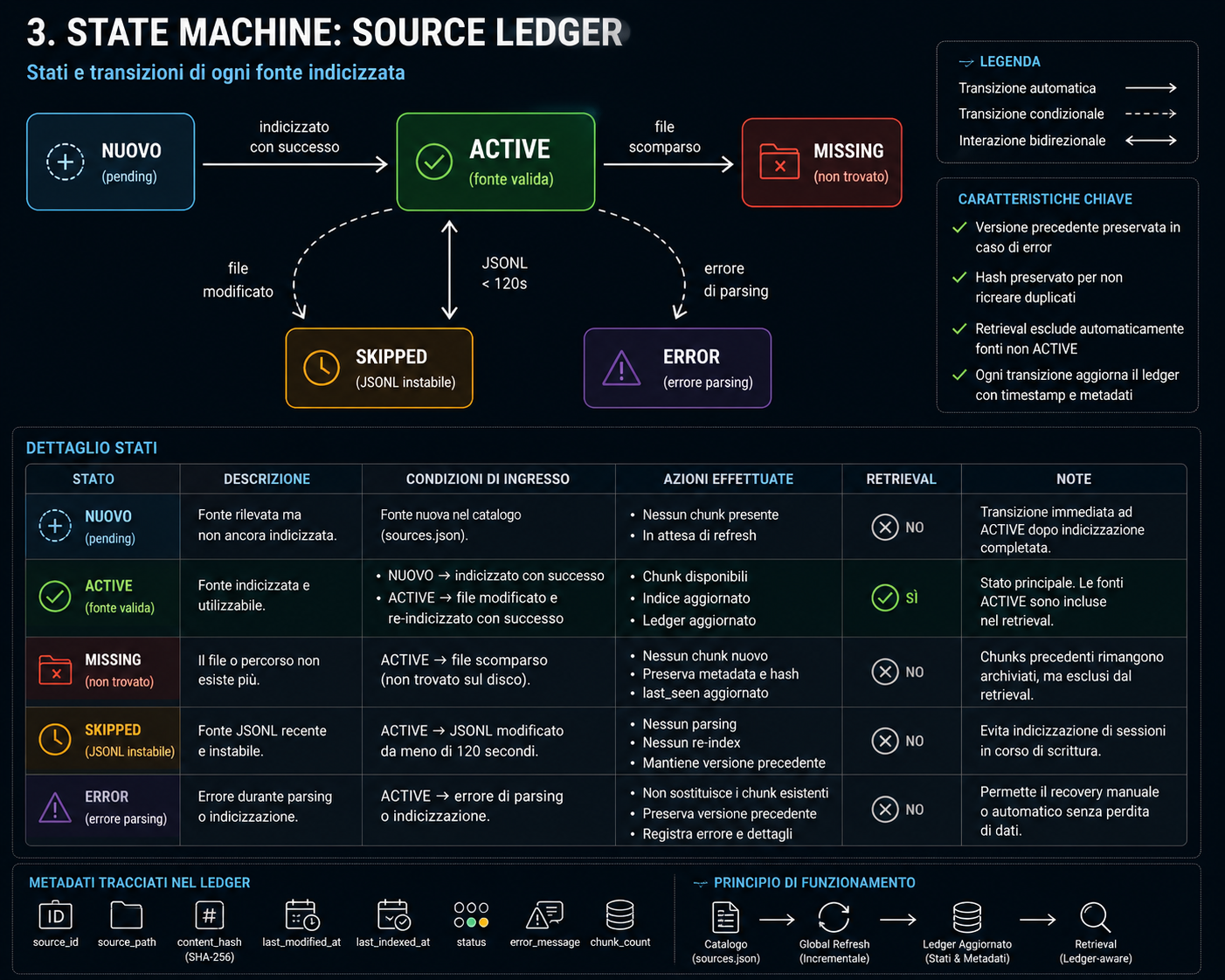
State machine del source ledger — active, missing, skipped, error.
Core gratuito per sempre. Pro opzionale a €39, una tantum.
Open source
Gratis
L'intero core locale, per sempre. Nessun account, nessun limite di prova, nessun vincolo.
- ✓Memoria locale SQLite + ricerca FTS5
- ✓Indicizzazione progetto & retrieval
- ✓Server MCP stdio
- ✓Export / import & migrazioni di schema
- ✓Candidati auto-memory (review manuale)
Licenza Pro
€39 · una tantum
Stessi dati local-first. Una chiave, fino a 3 attivazioni dispositivo, valida 1 anno, rinnovabile.
- ✓Tutto ciò che c'è in Free
- ✓Auto-memory avanzata (senza review manuale)
- ✓Knowledge dashboard (UI web)
- ✓Vista unificata cross-progetto
- ✓Supporto email prioritario
Le funzionalità Pro sono attive tramite flag di licenza. Alcune (come la Knowledge Dashboard) sono ancora in fase di rilascio e si sbloccano automaticamente non appena pubblicate, senza costi aggiuntivi.
TrueNex